Mental health first aid training and prevention across South Central Kansas.
MHASCK offers mental health first aid training, prevention, and early intervention across South Central Kansas, helping schools, workplaces, and community groups spot concerns early and respond with confidence. You do not need to be a clinician to bring this to your group. Our team teaches practical skills, leads awareness programs, and supports young people in building resilience, so more people get help before a hard moment becomes a crisis.
In crisis right now? Call or text 988 for the Suicide & Crisis Lifeline, any time.
A community takes care of its own before problems grow.
Care is built around your family, not a one-size-fits-all checklist.
Prevention and early intervention programs help young people build skills, strengthen resilience and receive support before concerns become more serious. Programs are free, do not require a professional referral and may be available beyond Sedgwick County. Prevention and early intervention describe how support is provided, not a separate age group.
A school or educator
You want age-appropriate mental health education and youth resiliency programs for your students.
A workplace or employer
You want to train staff to notice and support coworkers who are struggling.
A faith or community group
You are looking for a speaker or an awareness event for the people you serve.
A professional who needs training
You need training, including continuing education, on mental health topics.
Someone who wants to be ready
You want to learn the warning signs and feel prepared to help a friend or family member.
Programs & supports available
Programs you can bring to your group.
We offer a range of prevention and education programs, and we will help you choose the right fit for your group and goals.
-
School-Based Prevention & Early Intervention
Classroom and small-group programs that build coping skills and connection.
-
Youth Resiliency & Healthy Coping
Programs that help young people manage stress, emotions, and relationships.
-
Mental Health Awareness
Presentations that reduce stigma and teach people how to start supportive conversations.
-
Suicide Prevention Education
Recognizing warning signs and responding safely, for everyday people and groups.
Learn more -
Professional & Continuing Education
Skill-building trainings for teachers, clinicians, and frontline staff.
-
Speaker & Presentation Requests
A knowledgeable presenter for your event, class, or staff meeting.
-
Community Outreach
Partnering with local organizations to reach people where they already are.
-
-

Youth program
Paths to Resilience.
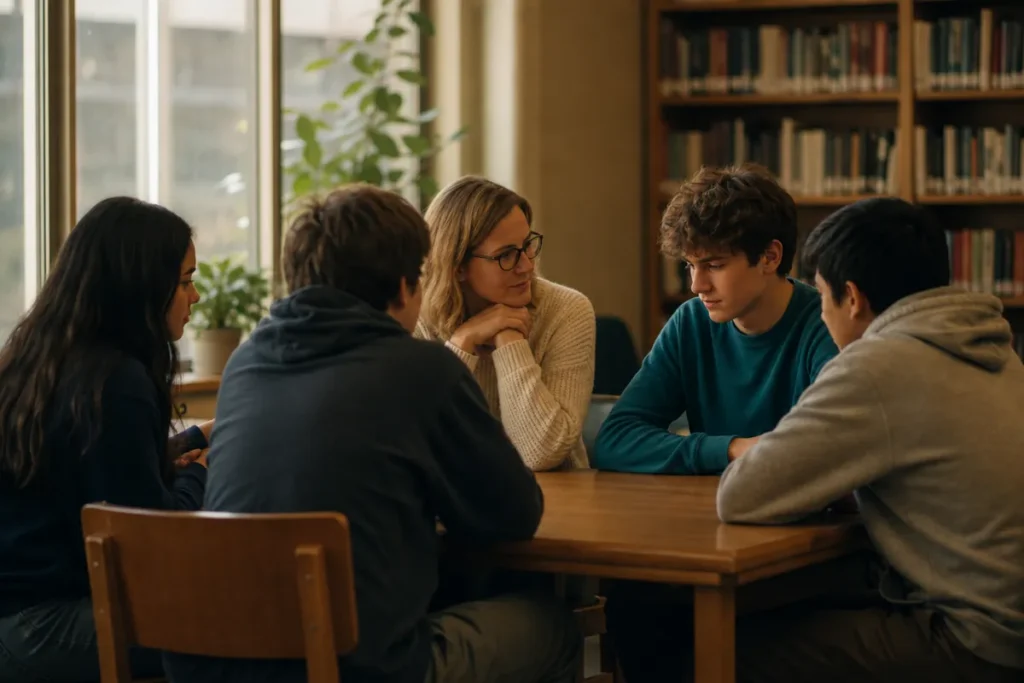
Paths to Resilience helps reduce youth risk and prevent future contact with the justice system. The program builds resilience, healthy coping skills, decision-making skills, educational engagement and goal-setting. It offers weekly small groups for youth in grades 6–12, with additional support from staff or mentors available, if desired, for youth at higher risk.
Not sure where to start? That is normal.
Most people who reach out are not certain what kind of help they need, and that is okay. You do not need a diagnosis, a referral, or the right words. Tell us a little about what is going on, and we will help you find the right place to begin.
Care that grows with you, not a program you outgrow.
Life changes, and support should change with it. Because all of our services sit under one roof, you can move between them without starting over. A teen who first meets us through a school program can find counseling as an adult. A family navigating a loved one’s illness can find housing and case management in the same place they found their first appointment.
-
Reach out
Call, message, or stop by. We listen first and help you name what you need.
-
Get matched
We connect you with the service and team that fit your situation and your budget.
-
Start care
You meet your team, share your goals, and begin at a pace that feels safe.
-
Keep growing
As your needs change, your support moves with you across our services.
Questions, answered simply.
The questions requesters ask most, answered simply. Still unsure? We are glad to talk it through.
Is there a cost for a speaker or training?
It depends on the program and audience. Many community awareness talks are free or low cost, and some professional trainings have a fee. Tell us your budget when you reach out and we will find an option that works. We never want cost to keep your group from learning.
How far in advance should we request a speaker?
Reach out as early as you can, ideally three to four weeks ahead. This gives us time to match the right presenter and tailor the content to your group. We will always try to accommodate shorter timelines, so contact us even if your event is soon.
Can individuals attend, not just organizations?
Yes. While many programs are built for schools, workplaces, and groups, individuals are welcome to learn too. Community awareness events and some trainings are open to anyone who wants to understand the signs and feel ready to help a friend or loved one.
Do you offer CEU-eligible trainings?
We offer professional trainings, and some are eligible for continuing education credit depending on the topic and your profession. When you contact us, tell us your field and what credit you need, and we will confirm which of our current trainings qualify.
Do you provide mental health first aid or QPR training?
Yes. We provide mental health first aid and suicide prevention training, including recognizing warning signs and responding safely. These skills help everyday people support someone in distress and connect them to help. Contact us to schedule a session for your school, workplace, or group.
Do you work with schools?
Yes. Schools are one of our largest partners. We offer classroom programs, youth resiliency curricula, and staff training. Reach out and we will design a program that fits your students and your calendar.
Can you present at our workplace?
Absolutely. We regularly present to employers on stress, burnout, recognizing struggling coworkers, and building a supportive culture. Sessions can be brief lunch talks or deeper trainings. Contact us with your team size and goals, and we will recommend the right format.
How do I request a program for my group?
Use the request form on this page or call us. Tell us about your group, your goals, and your preferred dates. Our team will follow up to plan the program, confirm details, and answer any questions before the session.
Bring prevention support to your community.
A more informed community is a safer, kinder one. Send a request and we will help you plan a program that fits your people and your goals.
